



Your tile floors are lying to you. They look low-maintenance, they came with the house, and every real estate listing from Brandon to FishHawk Ranch brags about them. But if you’ve ever mopped on a Saturday and found cloudy streaks by Sunday, you already know the truth: learning how to clean tile floors in Florida is a different sport than cleaning them anywhere else.
Between the humidity, the hard water, and whatever the kids tracked in from the Alafia River, tile here takes a beating. The good news? Once you know the right method (and the right cleaner), the whole job takes 20 minutes and stops being a weekly argument with your floor.

What’s the Best Way to Clean Tile Floors in a Florida Home?
Short answer: sweep or vacuum first, mop with warm water and a pH-neutral cleaner, change your mop water before it turns into soup, and dry the floor with a towel or fan instead of letting it air-dry. That last step is the one everybody skips, and it’s exactly why Florida tile ends up hazy. Hard water evaporates, minerals stay behind, and you get that ghostly film that makes clean floors look dirty.
That’s the whole game. Everything below is just the supporting cast.
Why Tile Floor Cleaning Is Harder in Hillsborough County
Tile in, say, Arizona has one enemy: dust. Tile in Riverview has a full villain roster.
Humidity
Grout is porous, humidity is relentless, and mildew treats the space between your tiles like a vacation rental with free breakfast. If your grout lines have gone from white to “mystery gray,” that’s not dirt. That’s a tenant.
Hard water
Much of the Tampa Bay area sits on limestone, which means mineral-heavy water. Mop with it, let it air-dry, and congratulations, you’ve just applied a thin coat of chalk to your floor.
Sand and pollen
Whether it’s beach sand from an Apollo Beach weekend or the yellow film that coats every car in Valrico each spring, grit acts like sandpaper underfoot. Skipping the sweep before you mop is how tile gets those fine scratches that dull the finish over time.
None of this means your floors are doomed. It means the generic “mop with whatever” advice from national blogs wasn’t written for houses in Bloomingdale.
What Cleaner to Use on Tile Floors (and What to Keep in the Garage)
Wondering what cleaner to use on tile floors? Here’s the cheat sheet:
Use these:
- A pH-neutral tile cleaner (the label will say it, look for “neutral” or “safe for stone and grout”)
- Warm water, changed halfway through if the bucket looks like sweet tea
- A microfiber mop, which grabs grit instead of pushing it around
- Baking soda paste for grout stains (cheap, mildly abrasive, weirdly satisfying)
Skip these:
- Vinegar on natural stone or as a weekly habit. It’s acidic, and acid slowly eats grout. Fine for a one-off haze fix on ceramic, terrible as a routine.
- Bleach on colored grout, unless you enjoy tie-dye floors
- Oil-based “shine” products, which build up a sticky film that attracts more dirt (the cleaning equivalent of a payday loan)
- String mops that just relocate dirty water into your grout lines
One more reason to take dirty mop water seriously: microbiologist Dr. Charles Gerba of the University of Arizona, who has spent decades studying household germs, has found that the wet, frequently touched spots in our homes (sponges, sinks, mop heads) harbor far more bacteria than the surfaces we assume are gross, like toilet seats. A mop that never gets rinsed and dried isn’t cleaning your floor. It’s seasoning it.
The 20-Minute Routine That Actually Works
- Dry clean first. Vacuum or sweep every time, no exceptions. Grit plus mop equals scratches.
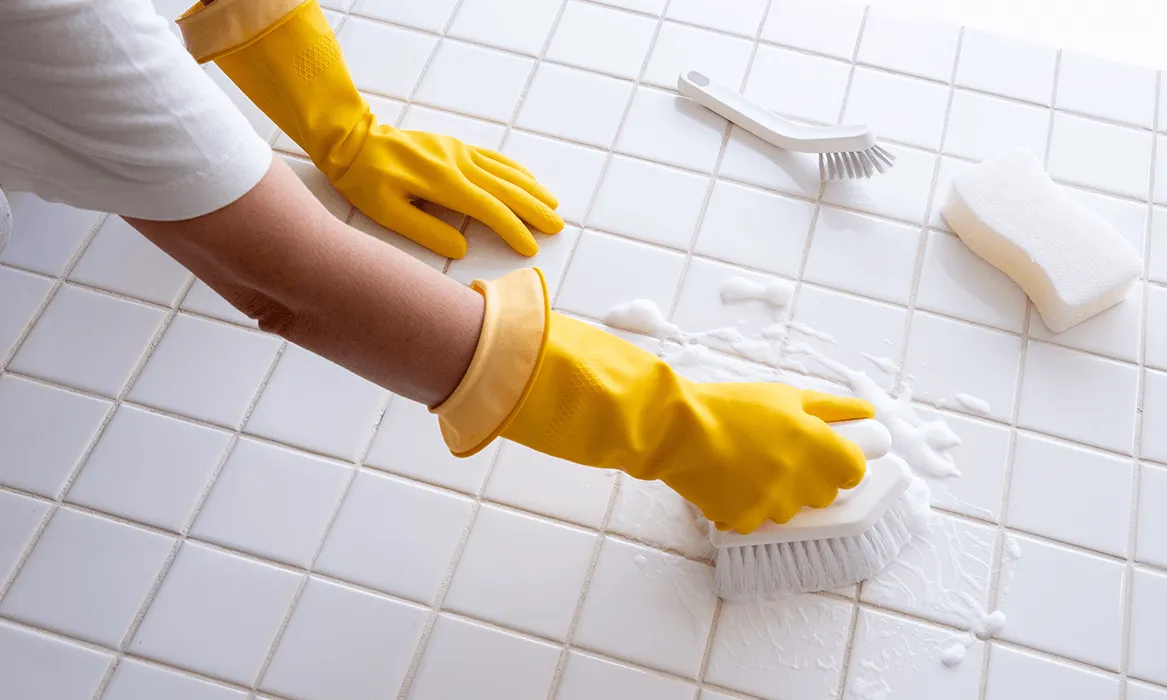
- Mop with neutral cleaner and warm water. Work in sections, back toward the exit. (Mopping yourself into a corner is a rite of passage. Do it once, then never again.)
- Refresh the water halfway. Cloudy water goes down the drain, not back on the floor.
- Dry the tile. Towel, dry mop pad, or ceiling fan on high. This is the anti-haze step.
- Hit grout monthly. Baking soda paste, soft brush, five minutes. Rinse well.
- Run the AC or a dehumidifier. Keeping indoor humidity down is grout mildew prevention that requires zero scrubbing. Your electric bill is already doing this job; let it.
Do this weekly and deep-clean grout monthly, and your tile will outlive your mortgage.
When Doing It Yourself Stops Making Sense
If you own a vacation rental in the area, you already know the math is different. Cleaning tile floor by tile floor between guests, on a same-day turnover, in August, is nobody’s idea of passive income. One streaky floor photo in a review can cost more than a year of professional cleanings.
Same goes for big single-story homes in Panther Trace or Waterset where tile runs wall to wall. Two thousand square feet of tile is not a mop job, it’s cardio. There’s no trophy for doing it yourself, just a sore back and a Saturday you’re not getting back.
The Part Where You Stop Mopping

MaidThis Cleaning of Brandon and Riverview connects homeowners and vacation rental hosts with vetted, background-checked cleaners who handle everything from weekly upkeep to full turnover cleans. Every cleaner goes through a five-step screening process, so the person showing up knows exactly how to clean tile floors without the streaks, the haze, or the tie-dye grout.
Book online in about a minute, get your Saturdays back, and let your tile finally look as good as the listing photos promised.