



Somewhere around Thanksgiving, the license plates on U.S. 1 start telling the story. New York. Ontario. Ohio. Michigan. The snowbirds are back in North Palm Beach, and so is the question nobody says out loud at baggage claim: what did the house do while I was gone?
Short answer? It sat through a Florida summer. The wettest months of the year, humidity that never clocks out, and an Atlantic hurricane season that runs through November 30. Your home handled all of it with the shutters closed, the A/C on its own, and nobody inside to notice a drip, a smell, or a palmetto bug signing a six-month lease on the pantry.
Most snowbird checklists online are about leaving: shut off the water, empty the fridge, head north. This snowbird checklist runs the other direction. It covers coming back, in the order that actually protects your home and your first week, for condo owners in Old Port Cove and Prosperity Harbor, homeowners in Lost Tree Village and The Twelve Oaks, and seasonal residents from Juno Beach to PGA National.
Unpack the sunscreen later. The house goes first.

What should a snowbird checklist include when you return to North Palm Beach?
Seven jobs, in this order:
- Walk the house before you unpack and trust your nose (musty, sewer-like, and sweet-rotten smells each point to a different problem)
- Turn the water back on slowly, then check every fixture, every sink cabinet, and the water heater
- Swap the A/C filter, clear the condensate drain line, and get indoor humidity under 60%
- Run water in every drain and flush every toilet to refill dry drain traps
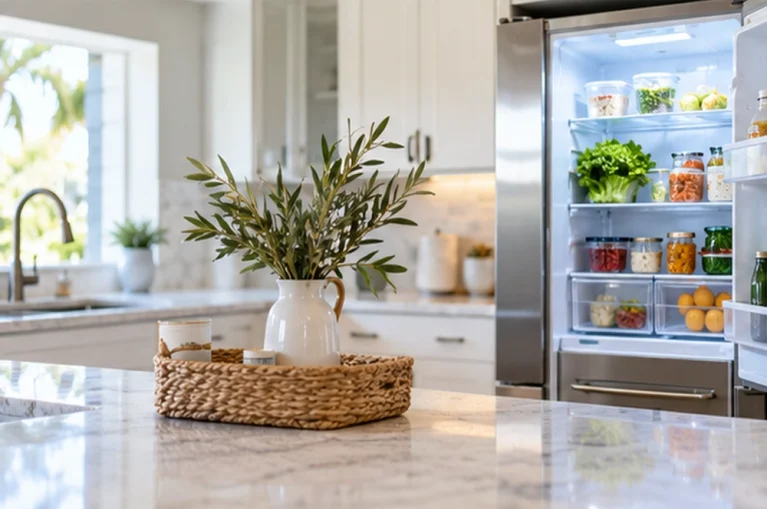
- Clean and air out the fridge, freezer, and pantry before groceries go in
- Check closets, linens, and leather for mildew, then wash anything that sat in storage
- Book a top-to-bottom reopening clean so settled dust and spores don’t start circulating once the house is lived in again
Groceries, tee times, and the first sunset on the Intracoastal come after. Fine, the sunset can overlap.
Why a closed-up Florida home needs more than a quick dusting
Up north, an empty house mostly just gets dusty. Down here, it gets busy. Moisture, bugs, and plumbing that nobody touched for half a year keep working the whole time you’re gone.
Extension specialists at the University of Florida’s IFAS program sum up seasonal homes in one line from their guide to closing a seasonal home: “Remember two key words: clean and dry.” Their reasoning is simple. Food crumbs and the body oils left on towels, clothes, and furniture pull moisture from the air, and that moisture draws in mildew, roaches, and ants. Clean and dry is the goal when you leave in April. Getting back to clean and dry is the job when you return.
The A/C was the only one working
How well your home held up depends a lot on what the thermostat did all summer. FPL’s guidance for seasonal residents is to keep the system somewhere around 78 to 82 degrees and let it cycle often enough to hold indoor humidity below 60%. Researchers at the Florida Solar Energy Center found the catch years ago: set the thermostat too high (they tested 85°F) and the A/C runs so little that it barely pulls moisture out. Lower bill, damper house.
Drains dried out
Every sink, tub, and shower has a P-trap, a little U-bend of water that blocks sewer gas from coming up the pipe. Months of Florida heat can evaporate it. That faint sewage smell in the guest bath is usually not a plumbing disaster. It’s usually just a thirsty drain.
Bugs moved into the quiet
A dark, silent pantry with a forgotten box of crackers is prime real estate for palmetto bugs and ants. So is the gap under a garage door nobody opened since spring.
Water found the weak spots
A toilet flapper that started running in July. A slow drip under the kitchen sink. A weeping fitting on the water heater. With no one home, small leaks get a months-long head start, and in a village where the typical home was built in the early 1970s, the plumbing has already had a long career.
None of this means your house is ruined. It means the first 48 hours matter more than the first unpacked suitcase.
The snowbird checklist for your first 48 hours back, step by step
Think of this as the opening credits. Nobody skips them the first time.
Before you fly: set up the landing
- Tell your condo manager or HOA when you’re arriving, and confirm where notices should go now that you’re back.
- Update gate passes and visitor lists. Lost Tree Village, Admirals Cove, BallenIsles, and Frenchman’s Creek all run gated entry, so your cleaner and A/C tech need to be on the list too.
- Reserve the service elevator or loading zone if your building requires it for luggage and deliveries.
- Confirm your FPL and Seacoast Utility Authority accounts are active, and cancel any mail forwarding.
- Book a reopening clean for the day before you land, so you walk into a house that is already breathing again.
Hour one: walk it before you unpack
Go room by room with the lights on and your phone camera out. You’re looking for three things: stains, smells, and anything that moved.
- Check the ceilings. Stains under the A/C air handler or below an upstairs bathroom point to a leak or a clogged drain line.
- Sniff closets and bathrooms. Musty means humidity. Rotten egg means a dry drain trap. Sweet and rotten means the fridge.
- Open the freezer. UF suggests leaving a bag of ice cubes in there before you head north. If you come back to one solid block instead of cubes, the power was off long enough for things to melt and refreeze, and everything in that freezer goes in the trash.
- Photograph anything that looks off before you clean it, in case your insurer or HOA wants a record.
Water: on slowly, eyes open
- Open the main valve gradually. Then close it and open it again to make sure it still turns, since valves that sit for months can seize.
- Run every faucet, shower, and tub for a couple of minutes and flush each toilet twice. This refills drain traps and pushes stale water out of the lines.
- Look under every sink and around the water heater while the water is running.
- If the water heater was drained, let the tank fill completely before you restore power. An electric element switched on in an empty tank can burn out fast.
- Throw out the first few batches from the ice maker.
A/C: filter, drain line, then thermostat
- Swap the filter. It spent the summer marinating in stale air.
- Check the condensate drain line and pan near the air handler. A clogged line is a classic reason for a wet ceiling in a South Florida fall.
- Set the thermostat where you’re comfortable, then watch indoor humidity for a few days. If an inexpensive hygrometer keeps reading above 60%, call your A/C company before mildew calls you.
- Leave interior and closet doors open on day one so conditioned air reaches every corner.
Kitchen: the fridge that sat with its door ajar
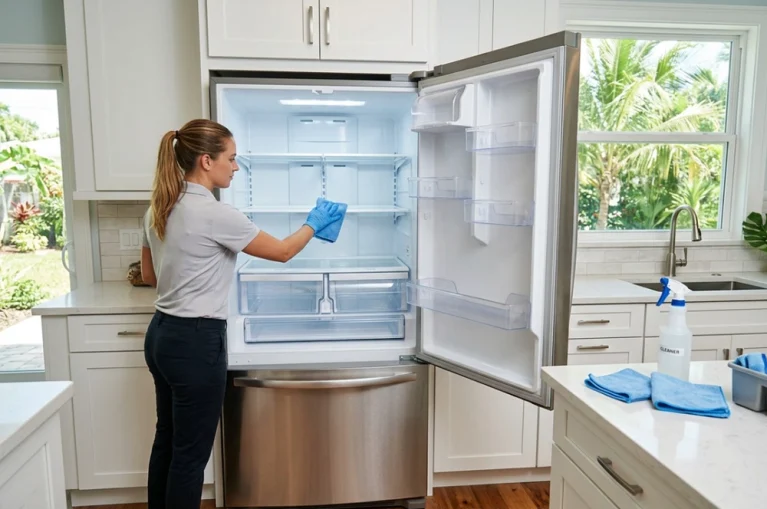
- Wipe the fridge interior and door gaskets with a baking soda solution (UF recommends one tablespoon per quart of water), then dry everything.
- Clear the pantry of anything opened, plus cereal, crackers, and pasta that stayed behind. Bugs consider these a welcome basket.
- Run the dishwasher and garbage disposal once while empty to flush out stale water.
- Wipe cabinet interiors before dishes and groceries go back in.
Closets, linens, and anything leather
- Wash bedding, towels, and anything stored in a linen closet before the first night.
- Check shoes, belts, handbags, and leather furniture for a white or greenish bloom. That’s mildew.
- Vacuum mattresses and upholstered furniture to pull out dust that settled over the summer.
Found spots on walls, grout, or ceilings? The mold and mildew prevention guide for North Palm Beach homes walks through what to do next and how to keep them from coming back.
Outside: shutters, lanai, salt
- Hurricane season runs through November 30, so decide whether the shutters come down now or later. Many HOAs and towns in Palm Beach County limit how long shutters can stay closed outside of a storm, so check your building’s rules.
- Rinse screens and sliding door tracks with fresh water before you scrub. Dry salt and sand just grind into the rollers.
- Reset the lanai furniture and check cushions for mildew.
- Dump standing water from planters and saucers before mosquitoes claim squatters’ rights.
Quick refresh or full reopening clean? How to tell
Not every homecoming needs the same level of cleaning. Here’s how it usually shakes out:
| What you find when you walk in | What it usually means | What to book |
|---|---|---|
| Light dust, fresh air, no odd smells | The A/C cycled and someone checked on the home | A standard clean to reset surfaces |
| Dust on every surface, stale air, dry drains, fridge odor | Five or six months with very little airflow | A first-time or deep clean, top to bottom |
| Musty smell plus spots on grout, closet walls, or leather | Indoor humidity stayed high over the summer | A deep clean plus an A/C humidity check |
| Water stains, warped flooring, or a soft ceiling | An active or past leak | A plumber or restoration company first, cleaning after |
About that last row: a cleaning service is not a mold remediation company. The EPA’s general guidance is that a moldy area larger than roughly 10 square feet calls for professional help rather than a scrub brush. Know which problem you have before you book.
Can’t be there first? How to have your home opened before you land
Plenty of North Palm Beach seasonal residents would rather not spend their first afternoon back in rubber gloves. Others have adult kids or a neighbor coordinating from out of town. Either way, the house can be opened before anyone arrives, as long as the handoff is planned:
- Choose the access method: a lockbox, a smart lock code, or a key left with your building’s front desk or concierge.
- Put every helper on the gate list and give your building notice of service visits.
- Send a short priority list: fridge first, beds made, towels out, thermostat set.
- Leave notes on the details only you know, like where the linens live and which products to skip on marble or natural stone.
- Ask for photos when the job is done, so you see the house before you see the house.
Handing a key to someone while you’re a thousand miles away takes trust. That’s why a cleaner’s background matters as much as their checklist. MaidThis cleaners go through a five-step screening process that ends with a background check, which is a lot more than you get from a random listing with a two-line bio.
What you can hand off (and why you might want to)
Yes, this is a cleaning company’s blog telling you not to do all the cleaning. Somebody had to say it.

MaidThis Cleaning of North Palm Beach handles seasonal home openings across North Palm Beach, Singer Island, Palm Beach Gardens, Juno Beach, Jupiter, and Tequesta. A reopening is usually booked as a first-time deep clean: dust off every surface, kitchen and bathrooms reset, inside the fridge on request, and beds made with the fresh linens you leave out. Pick the date before your flight, and cleaners can work through a concierge, lockbox, or gate pass while you’re still packing up north.
Once you’re settled, recurring visits through the season keep the house the way you came back to it. Flat-rate prices by bedroom count are published on the house cleaning services page, so you know the number before anyone rings the bell. Eco-friendly products are available on request, and service is available in English and Spanish.
Book your reopening clean now, before the November rush fills the calendar, and your first week back goes to the beach, the boat, or the golf course instead of the grout.