



You finish the last wooden step on the River Place Nature Trail, legs shaking, convinced you just earned a breakfast taco the size of a football. Forty minutes later you are face down on the couch, and so is a healthy share of whatever the Ashe junipers around Four Points released that morning. Nobody warns you about that part. If you want to keep cedar pollen out of your house this winter, the trail is not really the problem. The ride home is.
Cedar fever season runs from December into February around here, and the yellow dust refuses to stay outdoors where it belongs. It hitches a ride on your fleece, your hair, your dog, and your car seats, then quietly moves into the sofa you paid too much for. This guide follows that pollen from the trailhead to your living room and shows you where to stop it, with some help from scientists who have spent real careers studying laundry. (Yes, that counts as a job. A respectable one.)
IN THIS POST YOU’LL LEARN:
How Does Juniper Pollen End Up Inside?
Why Juniper Pollen Hits Hardest on Local Trails
Five Ways Pollen Rides Home With You
How to Get Pollen Out of Clothes
How to Remove Cedar Pollen From Your Living Room
Timing Your Hikes Around Cedar Fever Season

How Does Juniper Pollen End Up Inside After a Hike?
Mostly on you. Ashe juniper pollen grains weigh almost nothing, so wind carries them for miles, and they cling to fabric, hair, and fur. After a hike, the grains travel on your clothing, your dog’s coat, your backpack, and your shoes, transfer to the car, and then settle into upholstery, rugs, and bedding the moment you sit down. Closed windows help. They do nothing about the hitchhikers.
That is actually the encouraging part. Pollen cannot crawl. It only travels when something carries it, which means you can make it get off somewhere other than your couch.
Why Juniper Pollen Hits Hardest on Local Trails
The Texas A&M Forest Service puts it plainly: cedar fever hits hardest west of I-35, where Ashe juniper grows thick alongside oaks. Pull up a map and the problem gets obvious. Bull Creek District Park, St. Edward’s Park off Spicewood Springs Road, the River Place Nature Trail, and the Great Hills Park trail all sit inside the juniper and oak belt that covers most of Northwest Austin. Your favorite weekend loop is basically the factory floor.
Only male trees release pollen, and they wait for a very specific moment. Forest Service biologist Robert Edmonson explains that after a cold front, the air dries out, the wind picks up, and every cone on a tree opens at the same time, so whole hillsides of juniper appear to smoke. That crisp, blue-sky morning after a norther, the exact morning every hiker in Travis County wants to be outside, is also the morning the trees fire everything they have.
The juniper deserves a little credit, though. The endangered golden-cheeked warbler nests only in Central Texas, and it builds those nests from strips of mature Ashe juniper bark. The trees stay, the birds stay, and the job of keeping pollen out of your living room lands on you.
The Pollen Relay: Five Ways It Rides Home With You
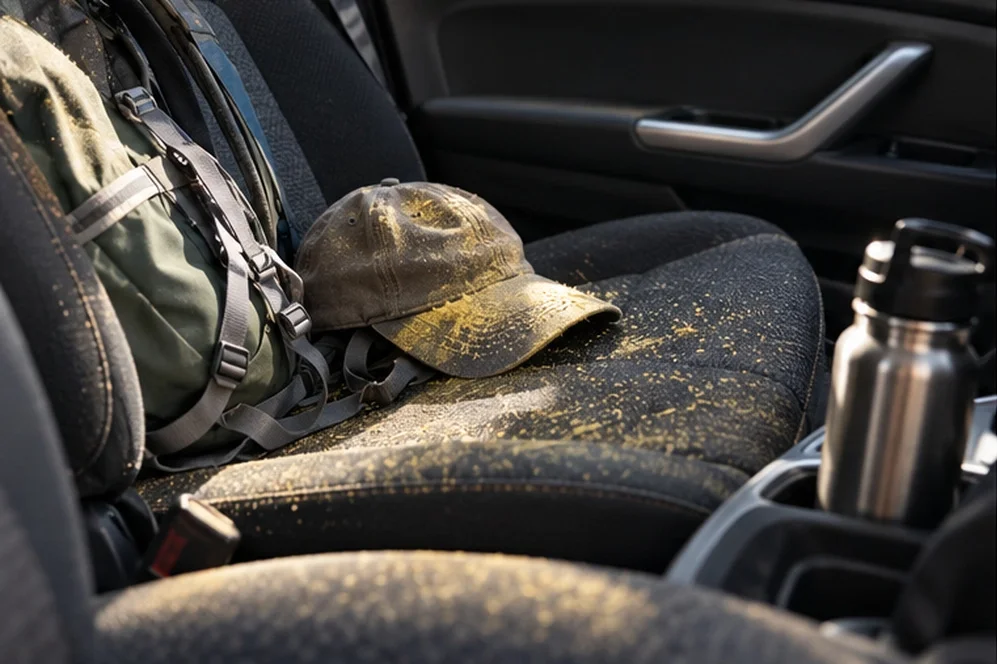
Think of the drive home as a relay race where pollen passes the baton at every stop. The usual route, trailhead to sofa:
Your clothes
Fleece, flannel, and anything with a brushed, fuzzy texture grab pollen and hold on. Smooth shell fabrics shed more of it, so a windbreaker makes the smarter outer layer on a high count day.
Your hair
Hair works like a built-in pollen trap. Allergy researchers have even measured personal pollen exposure by washing volunteers’ hair and counting the grains. A cap or a buff blocks most of it.
Your dog
A retriever who spent an hour on the Brushy Creek Regional Trail comes home carrying a respectable sample of the forest in that double coat.
Your gear
Backpacks, trekking poles, and the picnic blanket tend to land on the kitchen counter or the couch, and they bring passengers.
Your car
Every seat and armrest you touch on the way home collects a little. The Forest Service also suggests changing the air conditioning filter in your car before peak days, not just the one in the hallway.
By the time you reach your front door in Cedar Park or Jollyville, the pollen has already had four or five chances to spread out. Each of those stops also gives you a chance to break the chain.
The Ten-Minute Door Routine That Stops Pollen Cold
The most effective allergy move of the whole season happens before anyone touches a vacuum. Run this routine after every hike from December through February, and you cut off the supply instead of chasing it from room to room:
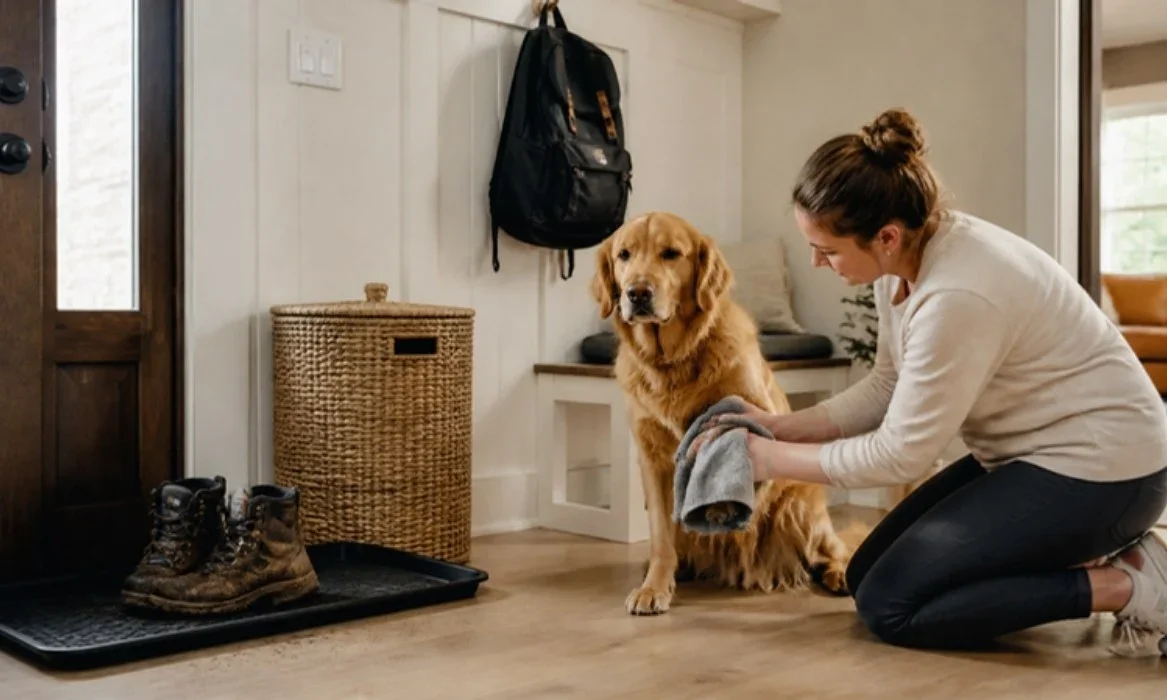
- Shake out before you drive. Shake your jacket and pack at the trailhead, toss gear in the trunk instead of the back seat, and give the dog a quick rubdown with a damp towel.
- Leave shoes outside. A boot tray on the porch or in the garage keeps trail grit and pollen off your floors.
- Use a lidded hamper at the entry. Clothes go straight in, or straight into the washer, never onto the bedroom carpet or the arm of the couch.
- Shower and wash your hair before you sit on anything soft. The couch can wait twelve minutes. It has waited longer.
- Wipe the dog down. A damp microfiber cloth over paws, legs, belly, and the top of the coat removes the loose layer before your dog hits the rug.
- Wipe the small stuff. Phone, sunglasses, water bottle, and keys all spent the morning outside too.
None of this requires special equipment. It takes one hamper with a lid, a stack of old towels, and the discipline to walk past the couch while it calls your name.
How to Get Pollen Out of Clothes (and Why the Rinse Matters More Than the Heat)
Here the research gets genuinely useful. Jung-Won Park and colleagues at Yonsei University tested how well different wash temperatures removed dust mite, dog, and pollen allergens from sheets, and they published their results in the Annals of Allergy, Asthma & Immunology in 2008. Hot water beat cooler water on pollen at first. After one extra rinse, though, the difference between temperatures disappeared.
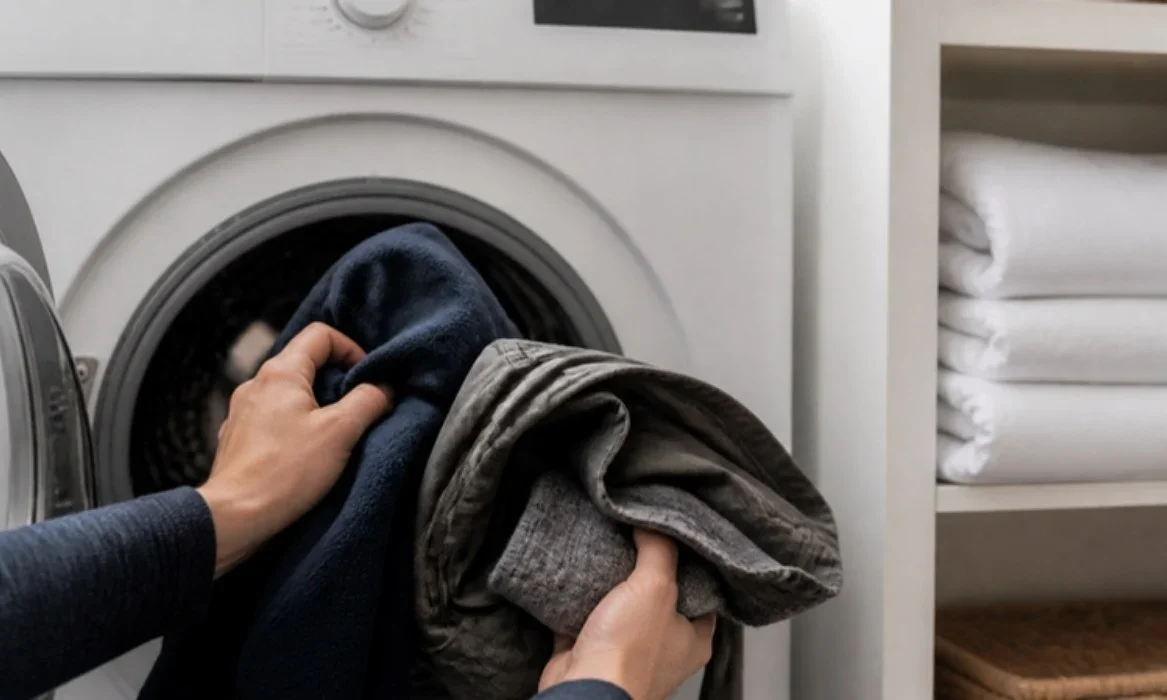
That changes how you should handle trail laundry. To get pollen out of clothes, a warm cycle with your regular detergent plus one added rinse does the job, and it treats performance fabrics far more kindly than a hot cycle does. Turn hiking pants inside out, skip the backyard clothesline from December through February, and let the dryer finish the work.
Dust mites play by different rules. Larry Arlian, a Wright State University biologist who has studied mites for decades, tested what ordinary home washing machines actually remove in a 2003 study in the Journal of Allergy and Clinical Immunology. Warm or cold washes with detergent stripped out about 84 percent of the mite allergen, and adding bleach pushed removal to roughly 98 percent. Live mites proved tougher. One wash removed between 60 and 83 percent of them, and some survivors moved onto the clean items sharing the same load.
The practical lesson from both studies: keep two piles. Trail clothes go warm with an extra rinse. Sheets, pillowcases, and the throw blanket that lives on the couch go in their own hot load, so nothing from the bedding swaps places with your hiking socks. For bedding temperatures in detail, the broader guide to reducing allergens at home covers the hot water numbers.
How to Remove Cedar Pollen From Your Living Room
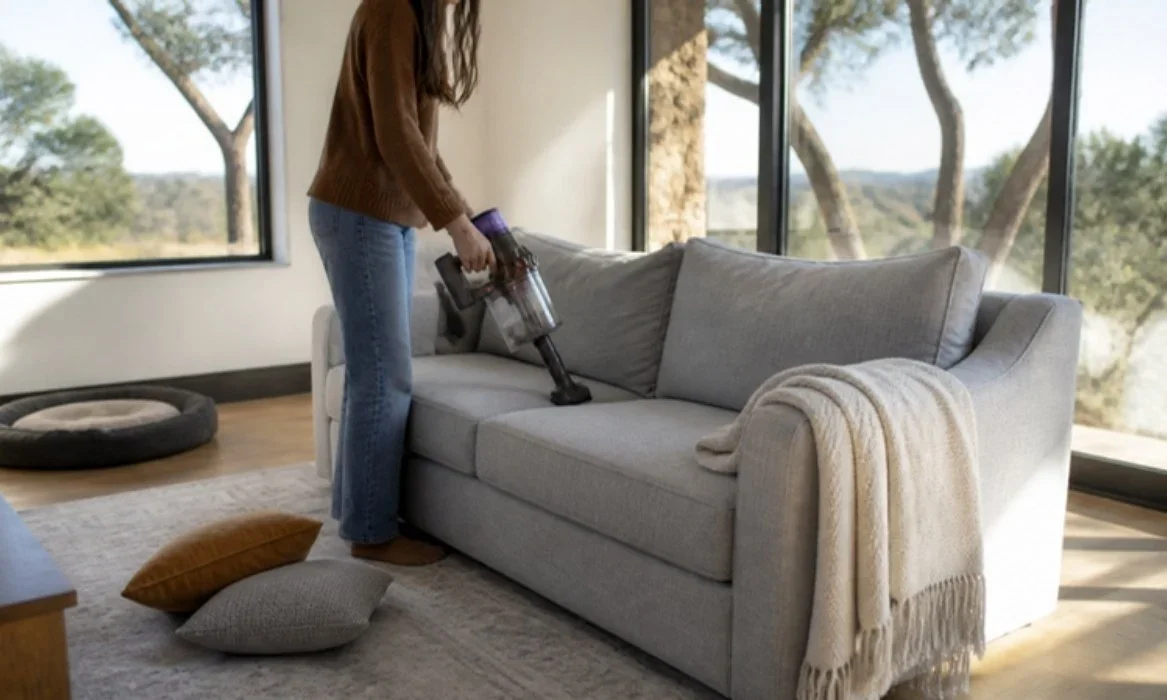
Even with a solid door routine, some cedar pollen sneaks inside. It lands in the same places every time: wherever people and dogs collapse after being outdoors. In most homes around Anderson Mill and Lakeline, that means the living room, where upholstery and rugs hold the grains long after you forgot about the hike.
Soft surfaces first
- vacuum the sofa with a HEPA filter vacuum twice a week in peak season, including the crevices and under the cushions
- wash throw blankets and removable cushion covers using the same two-pile laundry rule
- wash or vacuum the dog bed weekly, since it works as your dog’s personal hamper
Hard surfaces second
- damp wipe tables, the TV stand, window sills, and blinds with microfiber, because dry dusting just launches pollen back into the air
- shake the entry rug outside, well away from the door, then damp mop the floor beneath it
- clean ceiling fan blades before the first warm January afternoon, unless you enjoy indoor snow
Order matters here. The classic rule says clean high to low, but in cedar season the bigger rule says trap, never scatter. A feather duster in January works like a tiny pollen leaf blower. If the couch has become the family landing pad, a dedicated living room cleaning visit gives upholstery, baseboards, and fan blades full attention in one pass.
Timing Your Hikes Around Cedar Fever Season
Juniper pollen usually starts flying in mid December, peaks around mid January, and fades by early March, right as oak pollen clocks in for its shift. You can still hike. You just hike smarter. Check the local pollen count before a long trail day, treat the morning after a cold front as a short walk day, and remember that a soaking rain usually knocks pollen out of the air for a day or so. On the truly brutal days, laps around The Domain count as cardio. Probably.
| Month | What the junipers do | What to do at home |
|---|---|---|
| November | Quiet before the season | Book a deep clean, change home and car air filters |
| December | Pollen release begins, usually mid month | Start the door routine after every hike |
| January | Peak season, worst right after cold fronts | Vacuum upholstery twice a week, wash bedding hot |
| February | Pollen tapers off | Keep the routine, wash curtains and throws at month end |
| March | Cedar fades, oak takes over | Switch focus to window sills, patios, and entry floors |
A clean house on December 1 beats a heroic scrub in late January, when you feel too congested to care about anything except tissues.
Hosting Airbnb and VRBO Guests in Cedar Season
Winter guests often travel from places with no cedar season at all, and they have no idea what hit them until the second morning. Ashe juniper pollen ignores your listing description entirely. Hosts across Northwest Austin can make a real difference with a few turnover changes: wash every throw and pillow cover, not just the sheets; vacuum upholstery at every checkout; replace HVAC filters more often from December through February; and leave a short welcome note asking guests to drop shoes by the door. Guests who can breathe write better reviews. That part comes from experience, not a journal.
When Allergy-Focused Deep Cleaning Makes Sense
November is the sweet spot. A thorough reset before the first junipers pop means you start the season with clean upholstery, dusted fan blades, fresh filters, and baseboards that are not quietly storing last spring’s oak pollen. From there, recurring visits through February keep the grains from piling up. Homes with pets or allergy sufferers get the most out of an allergy-focused deep cleaning in late fall, followed by a lighter rhythm once the season starts.

MaidThis Cleaning of Northwest Austin connects homeowners and short-term rental hosts with vetted independent cleaners who pass a five-step screening and orientation process. Cleaners arrive with supplies, and you can request allergy-friendly or eco-friendly products when you book. Every visit comes with a 100% Happiness Guarantee (a free two-hour recleaning for anything missed), a No-Show Guarantee, and free cancellation with 24-hour notice.
For cedar season, that means you can hand the heavy work (upholstery, baseboards, vent covers, fan blades, floors) to a recurring house cleaning service and keep the ten-minute door routine for yourself. Flag your priority spots when you book, and keep in mind that add-ons can change the visit length and price.
Your Next Hike Can Stay on the Trail
Cedar season shows up every year whether you hike or not. The only question is how much of Bull Creek follows you home. Stop it at the car, stop it at the door, wash it out with an extra rinse, and give the living room a proper reset before December.
When you want backup, book a deep clean or a recurring visit online in about a minute: vetted independent cleaners, a free two-hour reclean if the cleaner misses anything, no-show protection, and free cancellation with 24-hour notice. The junipers can keep their pollen. Your couch has other plans.