


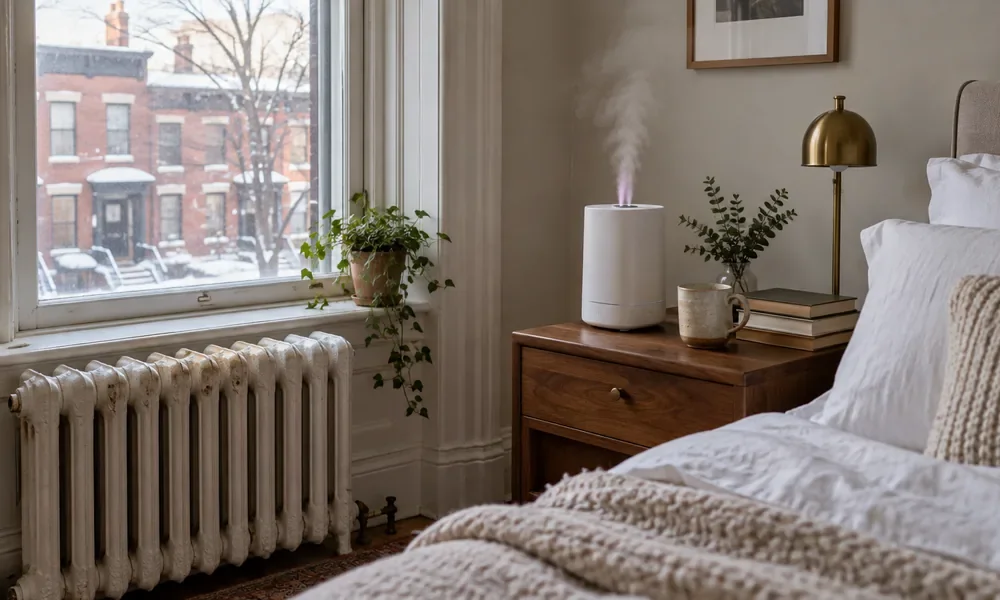

Every October, Philly does the same thing. The radiators clank back to life, the air inside your rowhome gets drier than a hoagie roll left on the dashboard, and somebody digs the humidifier out of the hall closet. Then they fill it with tap water, plug it in, and forget about it until March.
That’s how a machine meant to help you breathe easier ends up misting a small science experiment into your bedroom. Learning how to clean a humidifier isn’t hard. It just has to happen on a schedule, with the right stuff. And in Philadelphia, PA, where tap water runs moderately hard to hard depending on your neighborhood, that schedule matters more than the instruction booklet lets on.
Here’s the routine that works: what to use, how often, what that pink slime is, and why the water plant serving your block decides how crusty your humidifier gets.
Key Takeaways
- Empty, wipe dry, and refill the tank every day. Deep clean every third day, which is the EPA’s schedule for portable units.
- White vinegar dissolves mineral scale. 3% hydrogen peroxide disinfects. Use them one at a time, never mixed, and rinse well.
- Pink film is usually bacteria, black or green spots are mold, and white crust is minerals. All three mean cleaning is overdue.
- Philadelphia tap water averaged 101 to 169 ppm hardness in 2025 depending on the treatment plant, so distilled water saves a lot of scrubbing.
- Keep indoor humidity at or below 50% so old rowhome windows don’t start sweating.
How Do You Clean a Humidifier the Right Way?
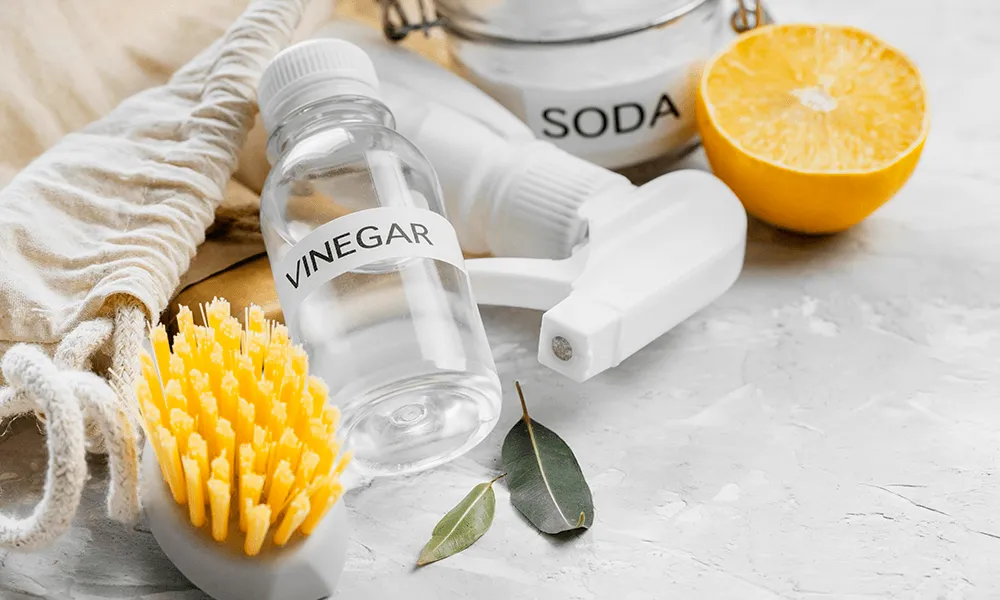
Unplug it, empty it, and take it apart. Soak the tank and the base reservoir in undiluted white vinegar for 20 to 30 minutes to loosen scale, scrub with a soft brush, then disinfect with 3% hydrogen peroxide (or whatever your manual names). Rinse every part several times with clean water and let it all air-dry before you put it back together.
Then do the boring part every day: dump yesterday’s water, wipe the tank dry, refill. That two-minute habit does more for your air than any cleaner you can buy.
How Often Should You Clean a Humidifier?
More often than you think. Probably more often than you’d like. The U.S. Environmental Protection Agency recommends emptying, drying, and refilling portable humidifiers daily and cleaning them every third day, because standing water grows microorganisms fast. Ultrasonic and impeller (cool-mist) models need the most discipline. The EPA notes they’re especially good at throwing whatever is in the tank straight into the air you breathe.
| Task | How often | Why it matters |
|---|---|---|
| Dump water, wipe tank dry, refill | Daily | Stops film before it starts |
| Scrub tank and base, then disinfect | Every 3 days | EPA schedule for portable units |
| Vinegar descale | Weekly, or when you see crust | Philly’s hard water builds scale quickly |
| Check the wick filter | Monthly; replace per your manual | Crusty wicks hold bacteria |
| Full clean, dry, and store | End of the season | Keeps summer mildew out of the closet |
Pulmonologist Dr. Killol Patel, director of Interventional Pulmonary at JFK University Medical Center, sums up the upside in one line: “Humidifiers help when the air is too dry.” The catch, in his view, is upkeep. He recommends washing the unit with mild dish soap and water twice a week and cleaning any filter at least monthly, and he’s clear that humidifier tablets and UV lights don’t replace an actual scrub.
How to Clean a Humidifier With Vinegar, Step by Step
Budget about 45 minutes, most of it the vinegar working while you do anything else. Check your manual first; a few brands ban specific cleaners, and voiding a warranty over a cup of vinegar is a bad trade.
1. Unplug it and dump the water
Every time. Water and electrical parts are not friends. Pour out the tank and the base reservoir.
2. Take it apart
Separate the tank, cap, base, and any filter or cartridge. If your unit has a wick filter, set it aside. Most wicks don’t get the vinegar treatment (more on that below).
3. Soak in white vinegar
Pour undiluted white vinegar into the tank and the base reservoir, swish it around, and let it sit 20 to 30 minutes. Heavy crust can take an hour. Never submerge the whole base, since the motor and electronics live in there. Just fill the part that normally holds water.
4. Scrub gently
A soft bottle brush handles the tank. An old soft toothbrush gets the corners, cap threads, and the little float. On ultrasonic models, the small metal disc (the transducer) is delicate, so brush it lightly. Steel wool or a knife can scratch it and end its career early.
5. Disinfect, separately
Rinse the vinegar out first. Then wipe or swish every surface that touches water with 3% hydrogen peroxide, which is what the EPA suggests when your manual doesn’t name a product. Some manufacturers allow a weak bleach solution instead. Use bleach only if your manual says so, and never in the same session as vinegar. Bleach plus an acid releases chlorine gas, and nobody needs that kind of excitement on a Tuesday night.
6. Rinse like you mean it
Rinse every part several times with clean water. Whatever you leave behind gets misted into the room the next time you switch it on.
7. Dry completely, then reassemble
Set the parts upside down on a clean towel and let them air-dry. Moisture sealed inside a reassembled unit gives the next round of slime a head start.
How to clean a humidifier without vinegar
Citric acid powder dissolved in warm water descales almost as well and smells like nothing at all. For a quick wash between deep cleans, warm water with a few drops of dish soap works fine, as long as you rinse until there isn’t a single bubble left. Leftover soap foams in the tank.
What about the filter? Evaporative humidifiers use a wick that soaks up water, and most wicks are disposable. Rinse with plain water if your manual allows it, skip the vinegar and soap unless the instructions say otherwise, and replace it once it turns stiff, brown, or smelly. A crusty wick isn’t saving you money. It’s farming.
Pink Slime, Black Spots, White Dust: What Each One Means
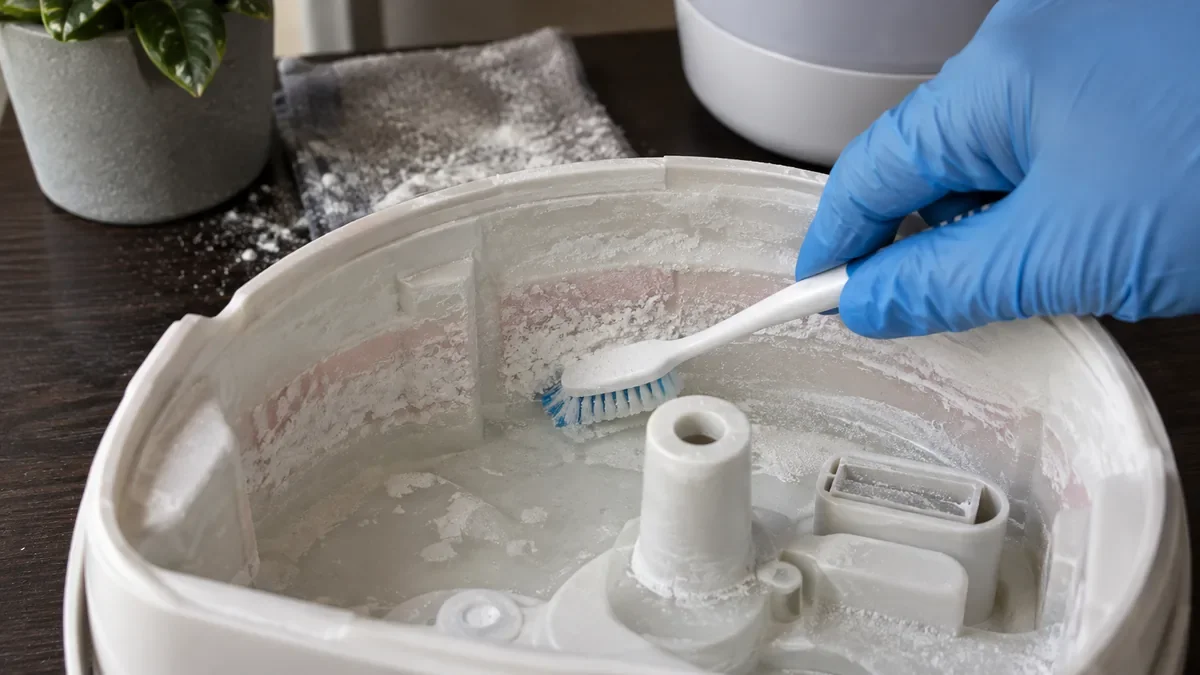
Humidifiers are terrible at keeping secrets. Here’s how to read the evidence:
- Pink or orange film: usually Serratia marcescens, a common bacterium behind that pink ring around shower drains. Scrub, disinfect, and expect it back fast if water sits.
- Black, green, or fuzzy spots: mold. Clean, disinfect, and check the float and cap threads. If it keeps returning from places you can’t reach, replace the unit.
- White crust in the tank: mineral scale. The U.S. Consumer Product Safety Commission points out that scale gives bacteria and fungi a surface to grow on, so it’s not just cosmetic.
- White dust on your furniture: minerals from tap water, launched into the room by ultrasonic and impeller models. The EPA says distilled water is the most effective fix.
- A musty or sour smell: something is growing in there. Don’t run it again until it’s been cleaned.
And no, the “antimicrobial” sticker doesn’t get you out of this. When Consumer Reports tested 34 humidifiers, models with antimicrobial claims weren’t reliably better at preventing bacterial growth. Cleaning is still the whole job.
Why Philadelphia Water Makes Humidifiers Crusty Faster
Your neighborhood decides more than your parking situation. According to the Philadelphia Water Department’s 2025 Drinking Water Quality Report, the city’s water is classed as moderately hard or hard, depending on which of its three treatment plants serves you.
| Treatment plant | Areas it mainly serves | Average hardness (2025) |
|---|---|---|
| Baxter (Delaware River) | Northeast and much of North Philadelphia | 101 ppm (about 6 grains per gallon) |
| Belmont (Schuylkill River) | West of the Schuylkill, including University City | 151 ppm (about 9 grains per gallon) |
| Queen Lane (Schuylkill River) | Northwest, including Manayunk, Roxborough, and Mount Airy | 169 ppm (about 10 grains per gallon) |
| Baxter and Queen Lane mix | Center City and South Philadelphia | Somewhere between the two |
Translation: a humidifier in a Roxborough twin fights noticeably harder water than one in Fox Chase. That means more scale, more white dust, and less time between descaling sessions. A few ways to fight back:
- Use distilled water in ultrasonic and impeller units. The EPA calls distillation the most effective way to strip out minerals. Bottled water labeled “spring” or “mineral” doesn’t count.
- Try a demineralization cartridge if your model takes one, and treat fresh white dust as the sign it’s used up.
- Consider an evaporative or warm-mist model next time. The EPA notes these release far fewer minerals into the air.
- Out on the Main Line or over in Cherry Hill? You’re on a different water utility, so check your own provider’s annual report before assuming anything.
Keep Winter Air Comfortable Without Feeding Mold
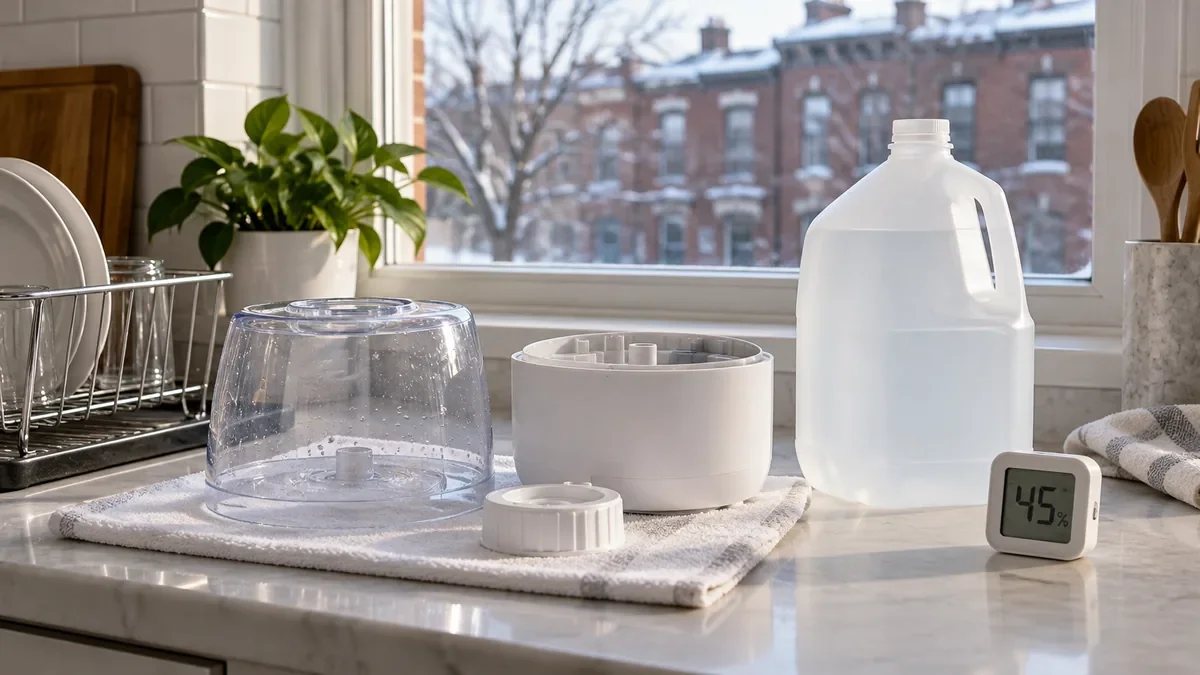
Plot twist: a spotless humidifier can still cause trouble if it runs too hard. The EPA recommends keeping indoor relative humidity at or below 50%, and the CPSC warns that levels above 60% let moisture condense on surfaces where bacteria and fungi settle in. An inexpensive digital hygrometer from any hardware store takes the guessing out of it.
Older Philly homes make this trickier. Trinity houses in Queen Village and Society Hill often still have original single-pane sash windows, and those become condensation magnets the moment indoor humidity climbs. Water beading on the glass in the morning? Turn the humidifier down or move it. Forced-air heat in Center City high-rise condos dries the air out fast, so condo owners usually run the humidifier more, and need to clean it more often.
Placement matters too. Put it on a flat, water-safe surface a few feet from the bed, away from walls, curtains, and wood furniture you love, and never on the radiator cover. If the humidifier lives in your bedroom, add it to your bedroom cleaning checklist right next to changing the sheets.
When spring shows up, do one last full clean, dry every part completely, toss used filters or cartridges, and store the unit somewhere dry (not a damp basement). Wash it again before the first cold night next fall. Closet dust is real.
Let Someone Else Handle the Rest of the House
Keeping a humidifier clean is a two-minute daily habit. Keeping a whole Philadelphia home clean through heating season (radiator dust, salty floors, steamy bathrooms) is a different job entirely.

That’s where MaidThis Cleaning of Philadelphia fits in. You’re matched with vetted independent cleaners (only about 2% of applicants make it through screening, background checks included), pricing is transparent with no hidden fees, and there’s a No-Show Guarantee plus a satisfaction guarantee. Set up recurring house cleaning in Philadelphia, or start with a one-time deep cleaning service that gets into the buildup regular tidying skips. If winter moisture has already left its mark on grout and tile, a dedicated bathroom cleaning handles the grout, fixtures, and mildew-prone corners.
Want the area around the humidifier wiped down while your cleaner is there? Mention it when you book, since special requests can change timing and price.
You keep the humidifier clean. Let someone else handle the bathrooms, floors, and kitchen anywhere in Philadelphia, Pennsylvania. Get your free quote and take your weekends back before the holidays land.