


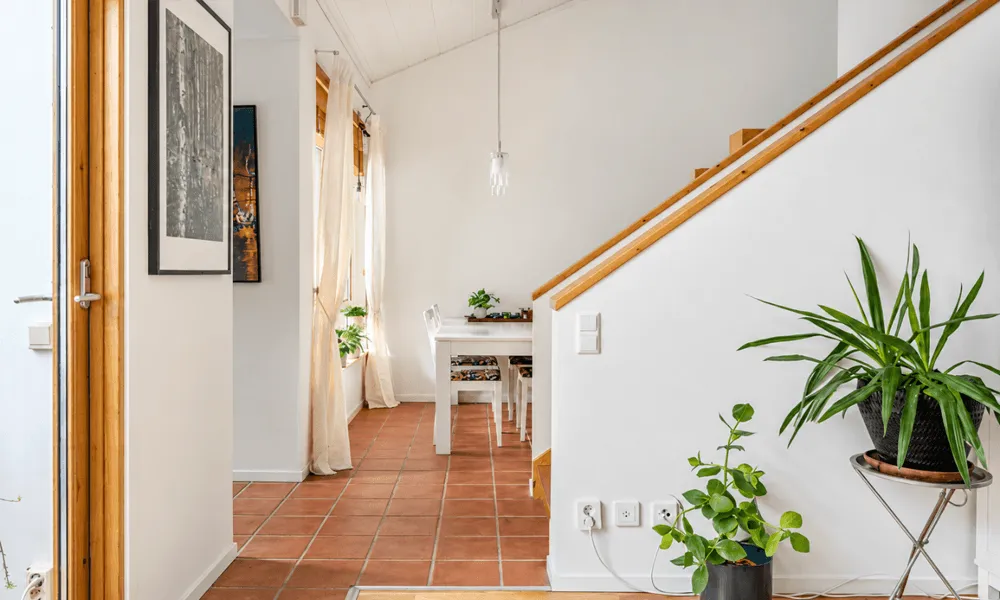

Saltillo tile is the Phoenix version of a vintage leather jacket. It looks better with a little character, it photographs like a dream, and one afternoon with good intentions and the wrong spray bottle can ruin it. If your floors came with a Territorial-style house in Cave Creek or a 1970s ranch in Sunnyslope, you probably know the routine: you mop, the floor dries, and somehow it looks worse than before you started. Before you blame yourself, blame the clay, the water, and the desert. This guide walks through how to clean saltillo tile the way the material actually wants to be cleaned, what to keep far away from it, and how to tell when a dull floor has stopped being a cleaning problem.
Key Takeaways
- Saltillo is handmade, low-fired clay, so the sealer does most of the protecting.
- Get the grit up first. Desert dust works like fine sandpaper on a sealed finish.
- Use warm water and a pH-neutral cleaner, wring the mop nearly dry, and buff the floor dry so Phoenix hard water cannot leave a haze.
- Keep vinegar, bleach, ammonia, steam mops, and scrub pads off saltillo.
- If a few drops of water darken the tile within minutes, the sealer is worn and it is time to call a tile restoration pro.
How Do You Clean Saltillo Tile Without Damaging It?
Remove the grit first, then damp-mop with warm water and a pH-neutral tile cleaner, and dry the floor right away. That is the whole routine for sealed saltillo. Anything acidic, abrasive, or steamy attacks the sealer, and once the sealer goes, the porous clay underneath starts soaking up spills, dirt, and the minerals in Phoenix tap water.
The method is simple. The mistakes are where people get creative.
Why Saltillo Tile Plays by Different Rules in Phoenix
Saltillo takes its name from Saltillo, a city in the Mexican state of Coahuila, where the tiles are still shaped by hand from local clay and fired at far lower temperatures than the porcelain at the big-box store. That is why no two tiles match, why you might spot a paw print in the surface, and why the clay absorbs liquid like a sponge with a grudge. A sealer (penetrating, topical, or both) is what turns that sponge into a floor.
Now add the Valley. Three local conditions chip away at that sealer every single day:
- Desert grit. Fine dust blows in, rides in on shoes, and grinds into the finish every time someone crosses the room. The sealer wears like a pair of jeans, knees first, which on a floor means doorways and the path to the fridge.
- Hard water. The City of Phoenix 2025 Water Quality Report lists tap water hardness at 172 to 302 parts per million, roughly 10 to 17.6 grains per gallon. The U.S. Geological Survey classifies anything above 180 as very hard. Mop with that water, let it air dry, and the minerals stay behind as a dull film.
- Sun. Tiles near a west-facing slider get blasted every afternoon from April to October. Along with the strip where everyone kicks off their shoes, they are usually the first to look faded and thirsty.
So when the floor looks tired, the clay usually is not dirty. The protective layer on top is worn down, filmed over, or both.
How to Clean Saltillo Tile Floors, Step by Step
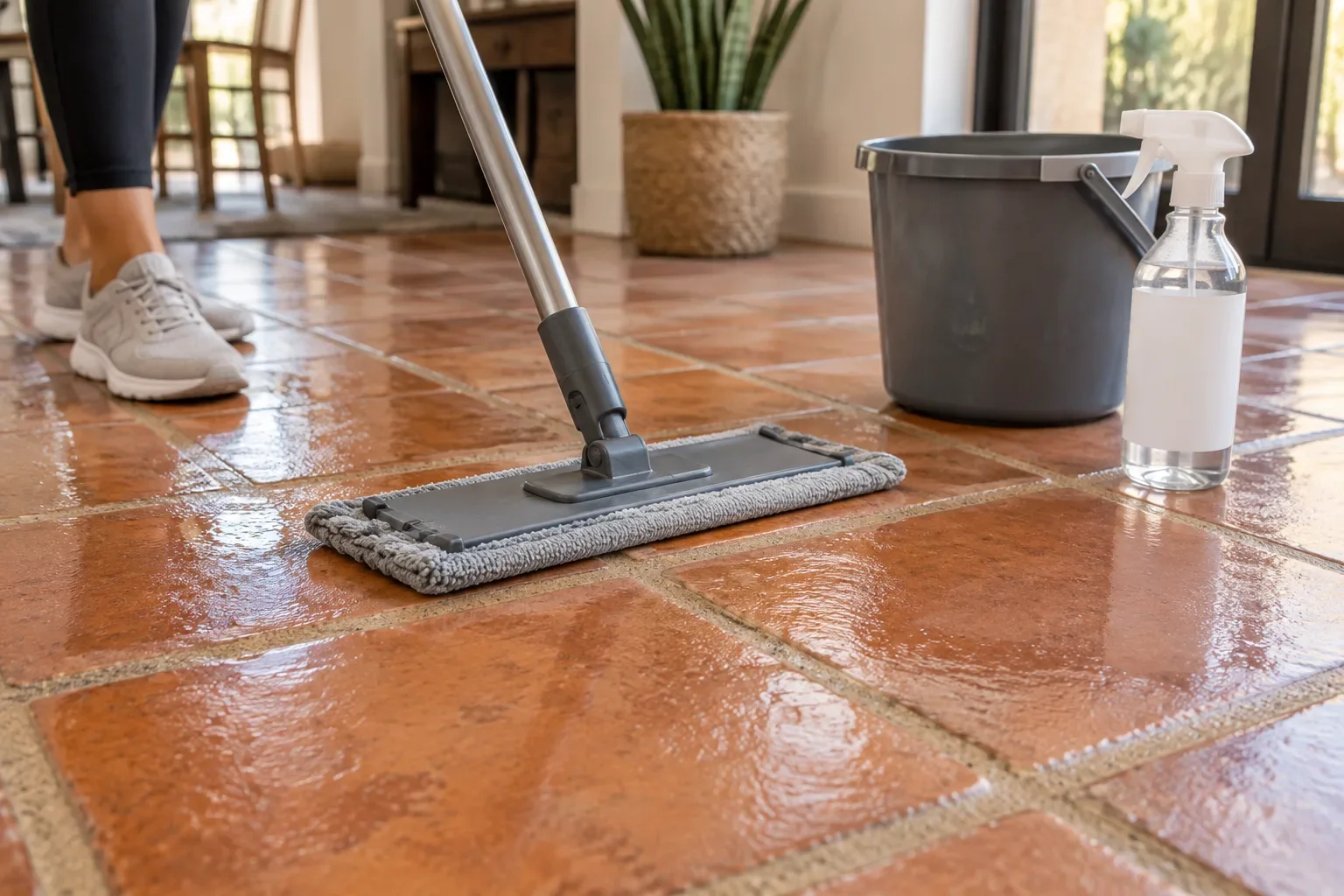
This routine is for sealed saltillo, which covers most indoor floors in Phoenix-area homes. (Not sure yours is sealed? Do the water drop test in the resealing section first, because water alone can stain raw clay.)
- Clear the grit. Vacuum on the hard-floor setting with the beater bar off, or use a dry microfiber dust mop. Go along the grout lines, since saltillo grout is wide and holds sand like a beach towel. If dust is a constant in your house, our guide on how to get rid of dust in a Phoenix house will cut down on how much lands on the floor in the first place.
- Mix a mild solution. Warm water plus a pH-neutral cleaner labeled safe for sealed stone, terracotta, or saltillo, diluted the way the bottle says. More soap does not mean more clean. It means more residue.
- Wring the mop until it is barely damp. Saltillo should never see puddles. Standing water seeps through thin spots in the sealer and leaves dark rings.
- Work in small sections. Start in the far corner and mop toward the door, unless you enjoy being stranded by the fridge like a cartoon character.
- Rinse if your cleaner calls for it. A quick pass with distilled water lifts leftover cleaner, and Phoenix minerals never get a vote.
- Buff it dry. Run a dry microfiber pad or towel over the floor right away. Everyone skips this step, and it is the difference between a floor that glows and one that looks like it was mopped with skim milk.
- Brush the grout as needed. A soft nylon brush and the same pH-neutral solution handle most grout lines. Leave wire brushes and anything labeled heavy duty in the garage.
For a lived-in Phoenix home, sweeping two or three times a week and damp-mopping once a week keeps most saltillo happy. Dogs, kids, and a decomposed-granite backyard move that schedule up.
The Best Cleaner for Saltillo Tile (and What to Keep Away From It)
The best cleaner for saltillo tile is boring on purpose: a pH-neutral tile and stone cleaner at the strength on the label. If the bottle brags about cutting through anything, keep walking. Here is the do-not-use list, and yes, some of these are the internet’s favorite hacks:
- Vinegar and lemon juice. Acid is the classic DIY tip and the classic regret. It can eat into the sealer and the cement-based grout around the tiles, leaving dull, blotchy patches.
- Bleach and ammonia. Too harsh for most sealers, and both can discolor the clay.
- Steam mops. Heat plus moisture can cloud a topical finish, and on worn spots it drives water straight into the tile.
- Scrub pads and melamine sponges. They clean by sanding. Your sealer did not sign up for sanding.
- Oil soaps and shine products not made for saltillo. They build into a tacky film that grabs dust, which in Phoenix is basically a welcome mat for the desert.
- Rubber- or latex-backed rugs. Heat and sunlight can soften some backings until they stick to the sealer. A felt or natural-fiber rug pad is the safer bet.
How to Fix White Haze, Dull Spots, and Stains on Saltillo
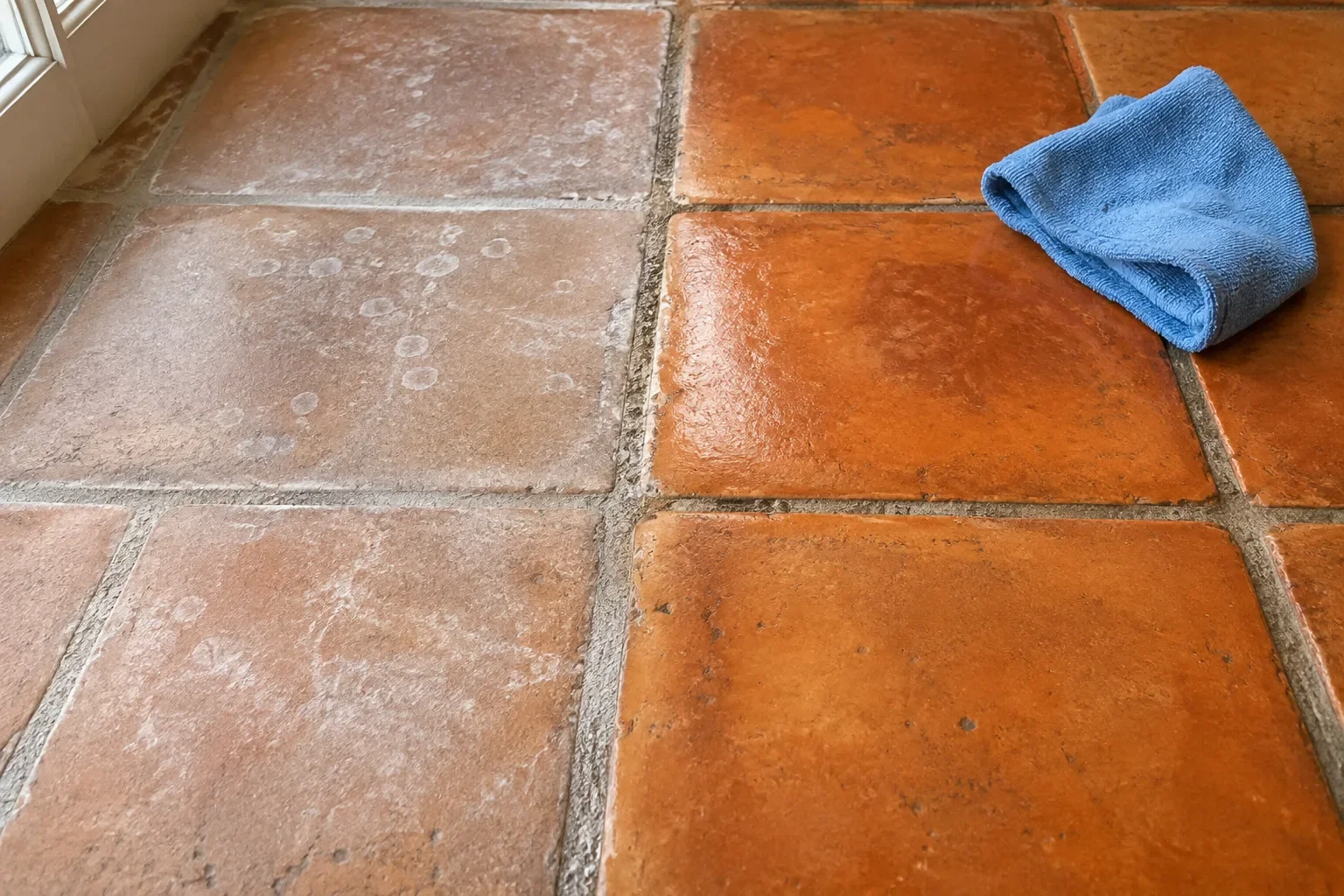
Even well-kept saltillo has bad days. Here is how to read the common ones.
White or cloudy haze
There are three usual suspects. The most common is mineral residue from mopping with hard water and letting it air dry. That one wipes away: re-mop with a pH-neutral cleaner and distilled water, then buff dry. (Same chemistry as removing hard-water stains from shower glass, different surface.) The second is efflorescence, a powdery white salt that migrates up from the slab or grout. Dry-brush or vacuum it, and if it keeps coming back, you have a moisture issue for a tile pro.
The third is a failing sealer. Michael Byrne, a tile contractor for more than 25 years and a longtime contributor to the Journal of Light Construction, has explained that a milky white cloud on sealed saltillo often comes from latex in the sealer re-emulsifying. He also notes there is no industry standard for saltillo pavers, so mystery sealers are common. If the haze sits under the surface and will not buff off, you are looking at a strip-and-reseal job, not a mopping job.
Dull traffic lanes
That path from the garage door to the kitchen is not dirtier than the rest of the floor. Its sealer is thinner. Mopping will not bring the sheen back. A maintenance coat or reseal will.
Grease, food, and pet accidents
Blot, do not wipe, and move fast, because a porous floor gives you minutes, not hours. For greasy spots on sealed tile, a few drops of mild dish soap in warm water usually does it, followed by a clean-water wipe and a dry buff. For pet accidents, use an enzyme cleaner labeled safe for stone or tile. Stains that soak into the clay are a job for a restoration pro.
How Often Should You Reseal Saltillo Tile in Phoenix?
Most saltillo needs resealing somewhere between every year and every five years, depending on the sealer type, the foot traffic, and how much sun the floor takes. You do not have to guess.
Try the water drop test. Put a few drops of water on a high-traffic tile and a rarely walked one, then wait about five minutes. If the water beads up, the sealer is doing its job. If the tile darkens or the water disappears, that area is absorbing, and the next spill will leave a mark. Doorways and sliders usually fail first.
One thing worth knowing before you book anyone: a house cleaning visit is not a resealing visit. Stripping old sealer and laying down new coats takes specialty products and long dry times, and it belongs to a tile and stone restoration company. Get that done first, then let routine cleaning protect the fresh finish.
Saltillo Tile Cleaning in Phoenix: When to Hand It Off
Here is the honest split. Stripping and resealing go to a stone restoration specialist. The weekly part (dry dusting, careful damp-mopping, buffing, the grout lines nobody wants to kneel for) is what a good house cleaner handles, and it decides how long that expensive reseal lasts. When saltillo runs through a whole first floor, which is common in older homes around Fountain Hills and Gilbert, the floor alone can eat a Saturday. If it has been a while, a deep cleaning visit resets everything, and recurring cleaning keeps it from sliding back.
About MaidThis Cleaning of Phoenix

MaidThis Cleaning of Phoenix connects Valley homeowners and short-term rental hosts with independent, background-checked cleaners who have passed a five-step screening process that most applicants do not get through. You get a flat-rate quote upfront, you pay after the cleaning is done, and every visit is backed by a 100% satisfaction guarantee. Cleaners bring their supplies, and if you have a saltillo-safe floor cleaner you love, set it out and mention it when you book. Special requests, like extra time on grout lines, are welcome, and add-ons can affect timing and price.
Your saltillo has survived decades of desert. It deserves better than vinegar and wishful thinking. Book a cleaning with MaidThis Cleaning of Phoenix and let your Saturday go back to being a Saturday.