




You get back to Spring Hill after five months up north, turn the key, and your house greets you with a smell somewhere between a wet library book and a gym bag nobody claimed. The palm trees look great. The lanai looks great. The guest bedroom smells like a basement, which is impressive, because Florida houses don’t have basements.
If you just typed “how to get rid of musty smell in house” into your phone while standing in the hallway holding your breath, you have company. October is when snowbirds roll back into Timber Pines, GlenLakes, and Seven Hills, and when year-round homeowners finally crack the windows after a summer of AC and 4 p.m. thunderstorms. That smell is not your house being dramatic. It’s a message, and the message is almost always about moisture.
This guide covers what the smell actually is, how to track it to its source, how to clear it out for good, and how to tell a cleaning job from a call to someone with a moisture meter. It’s written for Hernando County homes, because a musty block home off Spring Hill Drive has different problems than a damp cellar in Ohio.

IN THIS POST YOU’LL LEARN:
How Do You Get Rid of a Musty Smell in Your House?
Why Does My House Smell Musty?
How to Get Rid of Musty Smell in House Air: A Step-by-Step Plan
Musty Smell in House After Being Closed Up?
Where Musty Smells Hide in Spring Hill Homes
How Do You Get Rid of a Musty Smell in Your House?
Find the moisture, remove what’s growing on it, and dry the air. In practice, that means airing the house out, tracking the smell to its strongest spot (usually a closet, bathroom, drain, or the AC air handler), washing hard surfaces with detergent and water, laundering or sun-drying fabrics, replacing the AC filter, and keeping indoor humidity below 60 percent with your air conditioner or a dehumidifier. Candles and plug-ins hide a musty smell for an afternoon. Moisture control makes it pack up and leave.
That’s the whole thing in one paragraph. The rest of this article is the details, which, fittingly, is where musty smells like to hide.
Why Does My House Smell Musty? It’s Not the Furniture’s Fault
That stale, earthy smell has a scientific explanation, and it isn’t “old house charm.” According to the U.S. Environmental Protection Agency, growing mold gives off gases called microbial volatile organic compounds, or mVOCs, and those gases are the source of the musty odor people link to mold. The agency’s position is refreshingly blunt: if a building smells moldy, mold is probably growing somewhere and it’s worth investigating.
The good news is that your nose is a very sensitive instrument. A musty smell doesn’t automatically mean you have a giant problem. It means you have a problem somewhere, maybe behind a closet door or inside the air handler, and your nose found it before your eyes did. Treat it like a smoke detector for dampness.
In Spring Hill homes, the dampness almost always traces back to one of three things. First, humid Gulf Coast air that sat trapped in a closed-up house all summer. Second, a slow water problem nobody noticed: a dripping AC condensate line, a weeping washer hose, roof flashing that gave up during storm season. Third, wet stuff that never fully dried, like pool towels, kayak gear from a Weeki Wachee paddle, or lanai cushions dragged inside before a storm and forgotten in the garage.
How to Get Rid of Musty Smell in House Air: A Step-by-Step Plan
Work through these in order. Jumping straight to the last step is how people end up with a lavender-scented mildew problem.
- Air the house out. Open windows and sliders on a dry day (fall finally gives you a few) and run every ceiling fan. Fresh air won’t fix the source, but it clears the backlog so you can tell where the smell is strongest.
- Follow your nose. Walk room to room and open every closet, vanity, and the door to the AC closet. Wherever the smell hits hardest is your starting point. Check under sinks, behind the washer, and around the water heater for stains, warped baseboards, or soft drywall.
- Fix the water before you clean. A drip under the sink or a clogged condensate line will undo any amount of scrubbing. The EPA advises drying water-damaged materials within 24 to 48 hours to keep mold from taking hold, so anything that got wet during a storm goes to the front of the line.
- Clean hard surfaces. Wash mildew off tile, grout, window sills, cabinet interiors, and baseboards with detergent and water, then dry everything completely. Never mix bleach with ammonia or acidic cleaners like vinegar. The fumes are dangerous, and no smell is worth that.
- Deal with the fabric. Wash curtains, bedding, pillow covers, and towels in the hottest water the label allows. Vacuum upholstery and mattresses slowly with a HEPA vacuum, then give cushions a few hours of sun on the lanai. Carpet that stays musty after cleaning may be holding moisture in the pad.
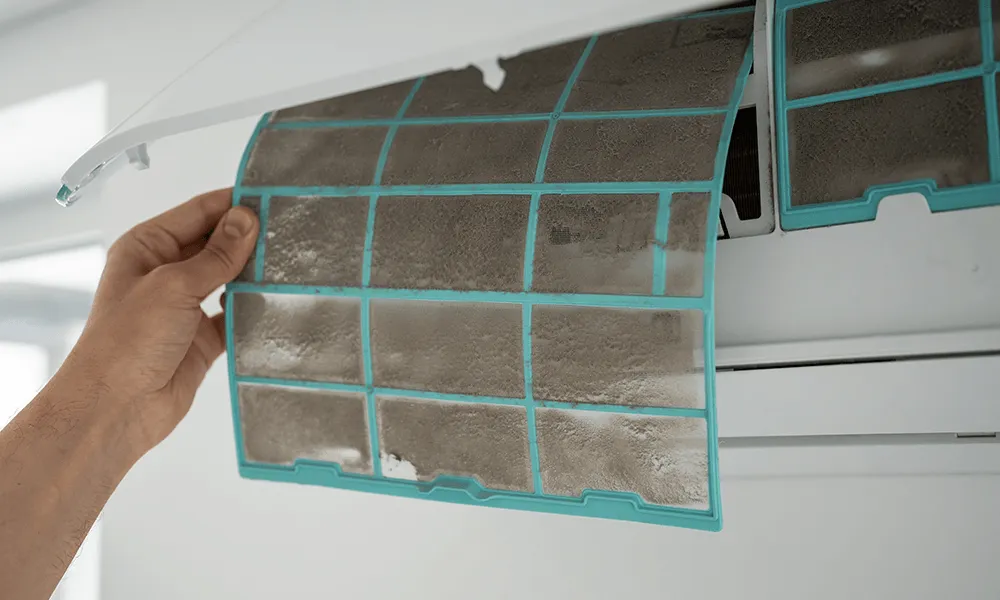
- Reset the AC system. Replace the filter, clean supply vents and return grilles, and have a technician check the evaporator coil and condensate pan. If the smell blasts out the moment the AC kicks on, the problem lives in the system, not the room.
- Dry the air and keep it dry. The EPA recommends keeping indoor humidity below 60 percent, ideally between 30 and 50. An inexpensive digital hygrometer tells you where you stand, and a dehumidifier handles the rooms the AC can’t keep up with.
- Freshen last. Once the source is gone, open boxes of baking soda or small bowls of activated charcoal in closets and cabinets will soak up the leftover odor. Before that point, they’re just decorating.
Musty Smell in House After Being Closed Up? A Snowbird Reopening Checklist
Hernando County fills back up every fall. If you spent the summer in Michigan or upstate New York and just got back to your villa in Timber Pines or your home in GlenLakes or Sterling Hill, your house spent five months as a sealed humidity experiment. Some people come home to nothing at all. Others come home to a closet full of fuzzy dress shoes.
The University of Florida has researched exactly this situation. In the UF/IFAS Extension publication “Closing Your Seasonal Home”, Virginia Peart, professor emeritus in UF/IFAS Family, Youth and Community Sciences, and her co-authors recommend leaving the air conditioner set no higher than 85°F while you’re away. Above that, indoor relative humidity climbs past the 55 to 60 percent range where mold and bacteria get comfortable. They also note that water sitting in drains and toilets evaporates in an empty house, which adds moisture to the air and, once the drain traps run dry, lets sewer gas in.
Translation: if your thermostat was parked at 88 to save money, the musty smell is the bill. Here’s what to do in your first 48 hours home:
- Run water in every sink, tub, and shower for a minute and flush every toilet to refill the drain traps. A sour, sewer-ish smell that fades afterward was a dry trap, not mold.
- If you left a bag of ice cubes in the freezer, check it. A solid block means the power went out long enough to melt and refreeze, and the food should go.
- Wipe the fridge interior with a baking soda solution (UF/IFAS suggests one tablespoon per quart of water) before restocking.
- Swap the AC filter and confirm the condensate line is draining outside.
- Open every closet and drawer, and check leather shoes, belts, and handbags for white or green fuzz.
- Pull bedding and towels out of storage and wash them before anyone sleeps on them.
- Look at ceilings, window frames, and the wall below each window for stains left by summer storms.
If you’d rather walk into a house that’s already aired out and scrubbed, book a deep cleaning service for the day before your flight lands. Many seasonal residents leave a key with a neighbor or set up a lockbox, and in gated communities like Timber Pines and Seven Hills, adding the cleaner to the gate list ahead of time saves a lot of phone tag at the guardhouse.
Where Musty Smells Hide in Spring Hill Homes
Florida houses have their own favorite hiding spots. Start with these.
Closets
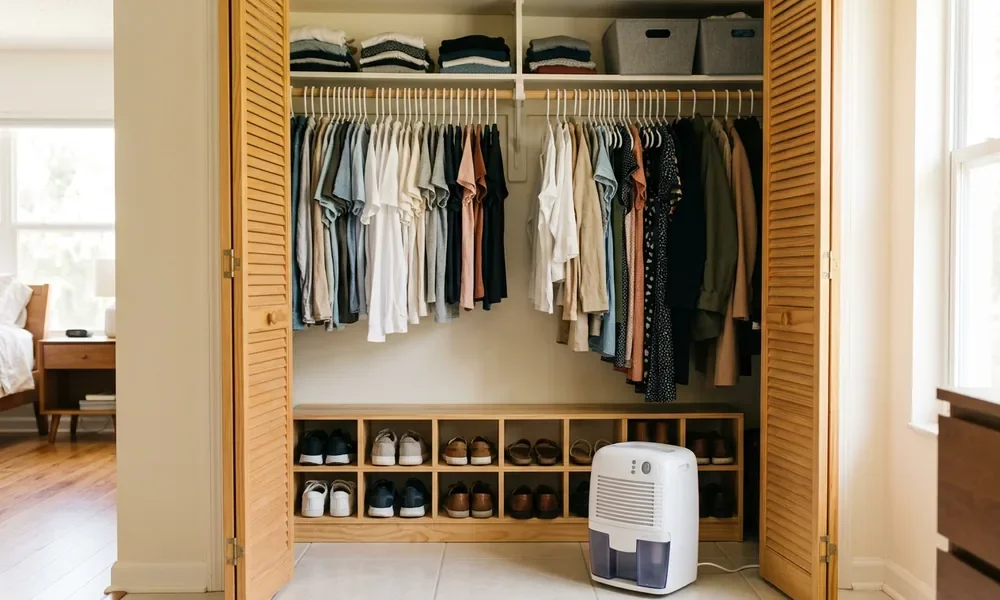
Still air plus stored fabric is mildew’s dream apartment. UF/IFAS recommends leaving space between garments so air can move, using plastic hangers instead of metal ones that can rust onto clothing, and never wrapping clothes tightly in plastic. Leave closet doors open when you can, and put a small dehumidifier or a moisture absorber in any closet that shares a wall with a bathroom.
Bathrooms, especially the one nobody uses
The guest bath is a repeat offender. Its drain trap dries out, the exhaust fan never runs, and the grout quietly turns gray. Run the fan, keep the shower door open after use, and scrub grout and caulk lines with a stiff brush. If caulk is dark from the inside, replace it, because no cleaner reaches mildew living underneath.
The AC closet and ductwork
In a lot of older Spring Hill block homes, the air handler sits in a hallway closet or the garage. A clogged filter, a dirty coil, or standing water in the drain pan turns the whole system into an odor sprinkler. If every room smells the same, look here first.
Laundry room, garage, and lanai
Front-load washer gaskets, a washer door left shut between loads, cardboard boxes stacked on the garage floor, and lanai cushions that never fully dry are all classic sources. Cardboard is basically a snack for mildew, so swap garage storage to sealed plastic bins. For the daily habits that keep these spots dry year-round, see the guide to keeping a clean home despite Florida’s heat and humidity.
How to Get Rid of Musty Smell in House Naturally, and What Doesn’t Work

Plenty of people want to clear a musty smell without a cabinet full of chemicals, and the good news is that the most effective tools are pretty boring. Sunlight and airflow do real work on fabrics and cushions. Baking soda and activated charcoal absorb odor in enclosed spaces. White vinegar cleans mildew off many hard surfaces (just keep it far away from bleach). And a dehumidifier, while not exactly “natural,” removes the one ingredient every musty smell needs.
Now the hall of shame. Scented candles, plug-ins, and fabric sprays are cologne on a gym sock: briefly confusing, ultimately worse. Air purifiers with HEPA and activated carbon filters can cut airborne spores and odor, but they don’t touch the damp drywall or closet that’s producing them. And skip ozone generators sold as air cleaners. The EPA has cautioned that ozone irritates the lungs, and that at concentrations that stay within public health standards, ozone is generally ineffective at cleaning indoor air.
Musty air and allergy symptoms often travel together. If someone in your house starts sneezing every October, the steps for how to remove allergens from your Spring Hill home pair well with everything above.
When a Musty Smell Is More Than a Cleaning Job
A good cleaning removes surface mildew, dust, and the grime that holds odor. It does not open walls. Call in a moisture or mold professional when the smell returns within a few days of a thorough clean, when you see stains, bubbling paint, or soft drywall, or when visible mold covers more than about 10 square feet, which is the point where the EPA’s mold guide suggests getting help instead of doing it yourself.
In Florida, mold assessors and mold remediators are licensed through the Department of Business and Professional Regulation, so ask for a license number. The Florida Department of Health does not recommend routine mold testing to find out whether you have a problem; if you can see it or smell it, the next step is fixing the moisture. For research-based home and family guidance close to home, UF/IFAS Extension Hernando County on Aviation Loop Drive in Brooksville is a solid local resource. And if anyone in the house has asthma or other health concerns tied to the smell, that’s a conversation for their doctor.
A Quick Word About MaidThis Cleaning of Spring Hill

MaidThis Cleaning of Spring Hill connects homeowners, seasonal residents, and vacation rental hosts across Spring Hill, Brooksville, Weeki Wachee, Hernando Beach, and the surrounding Hernando County communities with background-checked, independent professional cleaners. You book online in a few minutes, pick a date, and a cleaner shows up with supplies and an eye for the spots musty smells hide.
What that means for you: grout scrubbed, closets wiped down, fans and vents dusted, and fabric-heavy rooms refreshed, so the only thing you smell when you walk in is a clean house. Just landed from Ohio? Schedule a clean before your arrival and skip the hallway sniff test entirely. Hosting guests near Weeki Wachee Springs or the Gulf? Reliable vacation rental turnover cleaning keeps “smelled a little musty” out of your reviews.
Ready to breathe easier? Get an instant quote and let someone else go nose-first into the guest bathroom.