



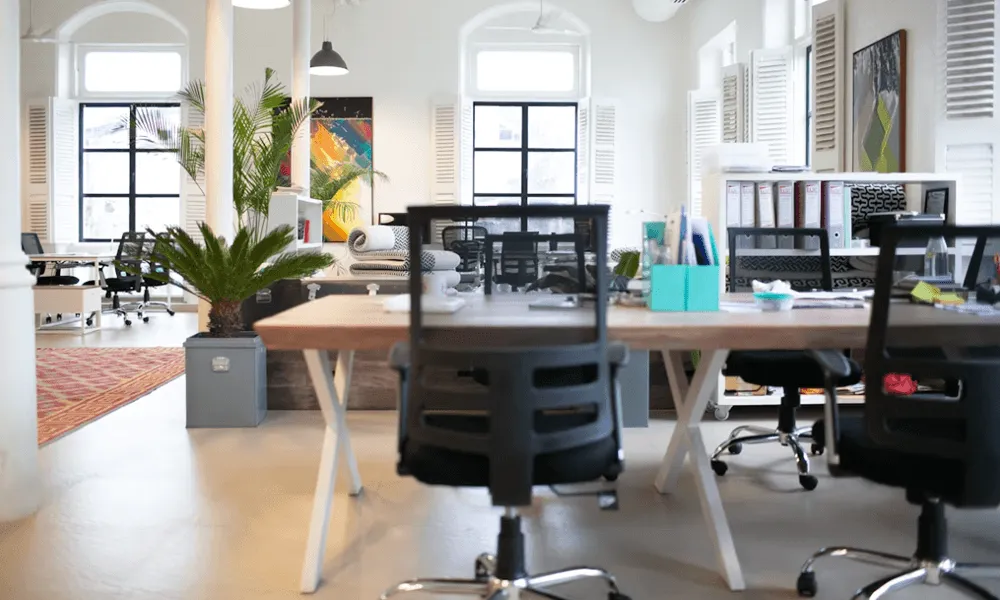

An office gets dirty by committee. Forty people each leave one mug, one crumb trail, and one jacket on a chair, and by Friday the place looks like a departure lounge. Nobody did it. Everybody did it.
First impressions still matter, and clients form theirs somewhere between the front door and the conference room. This guide covers how to keep your office clean with a schedule people actually follow, a few habits worth enforcing, and an honest split between what your team can handle and what belongs to professionals.
How do you maintain an office?
As with all types of cleaning, consistency is key. Create an effective cleaning schedule for your workspace, and stick to it. Recurring cleanings will keep your premises looking and feeling fresh, and will also prevent your computers from getting choked with dust and your carpeting from being ruined by mold.
But wait, how frequent should these cleanings be? An average home needs to be given a standard cleaning (dusting, vacuuming, mopping the floors, and tidying up) once a week, but even smaller offices tend to see a lot more traffic than most homes.
Factors to consider when choosing a recurring cleaning plan for your office include:
- Employees, clients, and visitors: the more people go through your premises each day, the more dirt and dust is going to be brought into it. For example, if your workplace is a bank or a brokerage firm that receives clients throughout the day, it’ll probably need to be cleaned every night.
- Weather conditions: if you live in a cold or rainy area, your workplace is going to get a lot of mud and dampness from all the people passing through it. On the other hand, areas with mild or warm climates tend to require less frequent cleanings.
- Type of work being done: companies that do most of their work on computers naturally have cleaner premises than businesses that rely on power tools and industrial machinery.
An office cleaning schedule that survives Monday
Post it where people make coffee. Vague schedules die; specific ones limp along, which is the best you can hope for.
Daily (5 to 10 minutes, staff)
Clear desks of trash and dishes, wipe the breakroom counter, run or empty the dishwasher, take out kitchen trash if it’s full, quick pass on the entry mat.
Weekly (staff or service)
Vacuum and mop floors, wipe desks and shared tables, clean the microwave inside, empty all trash and recycling, top up restroom and kitchen supplies.
Monthly (service)
Dust vents, shelves, and window sills, disinfect phones and shared keyboards, clean interior glass, degrease the breakroom appliances, wipe chair arms and door handles.
Quarterly (service)
Carpet extraction in traffic lanes, high dusting, behind and under furniture, fridge purge with a warning email first, exterior window cleaning if you’re on the ground floor.
How to keep your office clean?
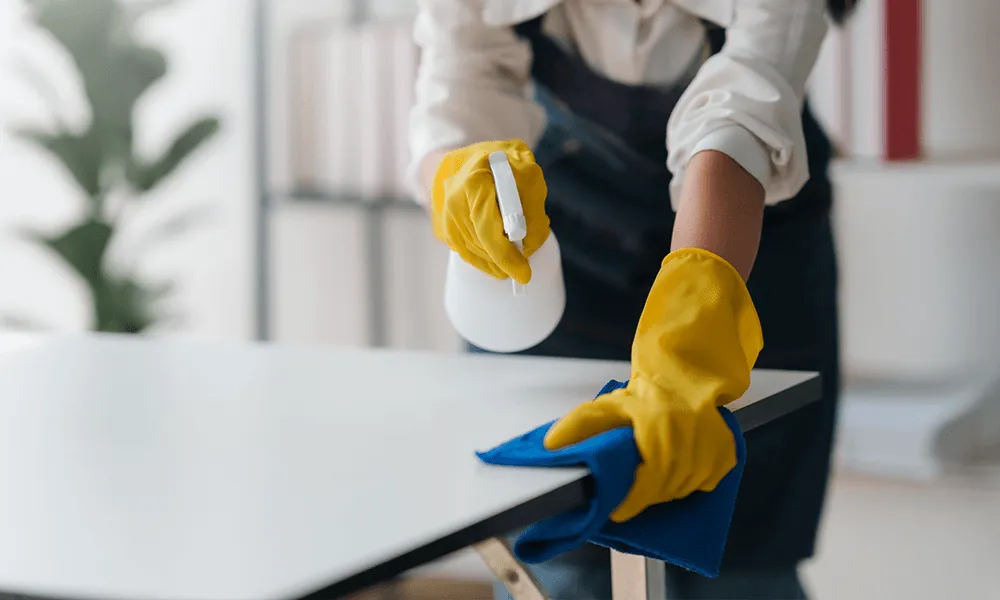
Workplaces should always be cleaned to a professional standard. Clean offices leave a positive impression on prospective clients, boost employee morale, and feel better to work at. Furthermore, companies that fail to provide sanitary working conditions are not only breaking the law, they can also be sued by their workers.
The best (and really the only) way to ensure your premises are always spotless is to schedule a recurring cleaning plan with a respected maid service. This way, your offices will be cleaned by experienced cleaners who have the tools and the training necessary to render a top-notch cleaning.
What’s more, by outsourcing your office cleaning to the pros, you’ll have one less thing to worry about and you’ll be regaining the free time you need to rest and recuperate after a long day at work.
How to keep your office clean between professional visits
Five habits do most of the work. Print them, share them, repeat them at onboarding:
- Dishes go in the dishwasher the same hour. The sink is a transit zone, not a home. This one rule prevents half of all breakroom resentment.
- Last one out resets the room. Meeting rooms get a 60-second sweep after every booking: chairs in, whiteboard erased, cups out.
- Eat with a lid or a plate. Crumbs in keyboards are forever. A desk-lunch culture is fine when wipes live within arm’s reach.
- Label the fridge and purge it on a schedule. Every other Friday, anything unlabeled or expired goes. Announce it once, then follow through without mercy.
- Make supplies visible. A small caddy per zone (wipes, spray, paper towels) means a spill gets handled in the moment instead of reported to someone.
What to leave to the pros
Staff habits keep an office presentable. They don’t keep it clean in the OSHA sense of the word, which requires workplaces to be kept clean, orderly, and sanitary. Restrooms, floors, and anything involving a ladder belong on a professional’s list:
- Restroom cleaning and disinfecting, daily to weekly by traffic
- Floor care: mopping with the right product per surface, carpet extraction, buffing
- High dusting (vents, light fixtures, the tops of cabinets nobody sees but everybody breathes)
- Trash and recycling hauling on a set night
- Windows, interior glass walls, and partitions
Asking employees to scrub toilets saves money right up until your best people start interviewing elsewhere. The case for a commercial service is mostly a case for keeping your team doing their actual jobs.
Rather have it handled by Monday morning?

A clean office is one of those things nobody notices until it’s gone. MaidThis connects businesses with screened, vetted cleaners in more than 40 US cities, from Los Angeles to Minneapolis to Atlanta.
Set up a recurring commercial schedule, hand over the restrooms and the floors, and let your team get back to the work you actually hired them for. Find your city or get in touch to talk through what your space needs.